
Impôts ici
Sale of Property by a Non-Resident
The sale of Canadian property by a non-resident is a sensitive tax operation. Beyond the real estate transaction, one must consider Section 116 of the Income Tax Act, the compliance certificate, T2062 or T2062A forms, withholding taxes, and provincial obligations when the property is located in Quebec.
A poorly prepared sale can tie up a significant amount and complicate the closing of the transaction.
Impôts ici assists non-residents, former residents, foreign investors, and Canadian property owners with their tax processes before, during, and after the sale.

Your business requires professionals to support you

Sale of Property by a Non-Resident
Understanding the Role of the Compliance Certificate
When a non-resident disposes of a taxable Canadian property, tax authorities want to ensure that the potential tax on the sale will be paid. The compliance certificate serves to frame this obligation. It confirms that the seller has notified the Canada Revenue Agency of the actual or projected disposition and that the tax conditions related to the transaction have been addressed.
Without this certificate, the buyer may be exposed to significant withholding obligations. This is why notaries, lawyers, and buyers generally request that the file be prepared before closing. The certificate is therefore not just a simple administrative form: it is an integral part of the tax security of the transaction.
Sale of Property by a Non-Resident
T2062, T2062A and Documents to Gather
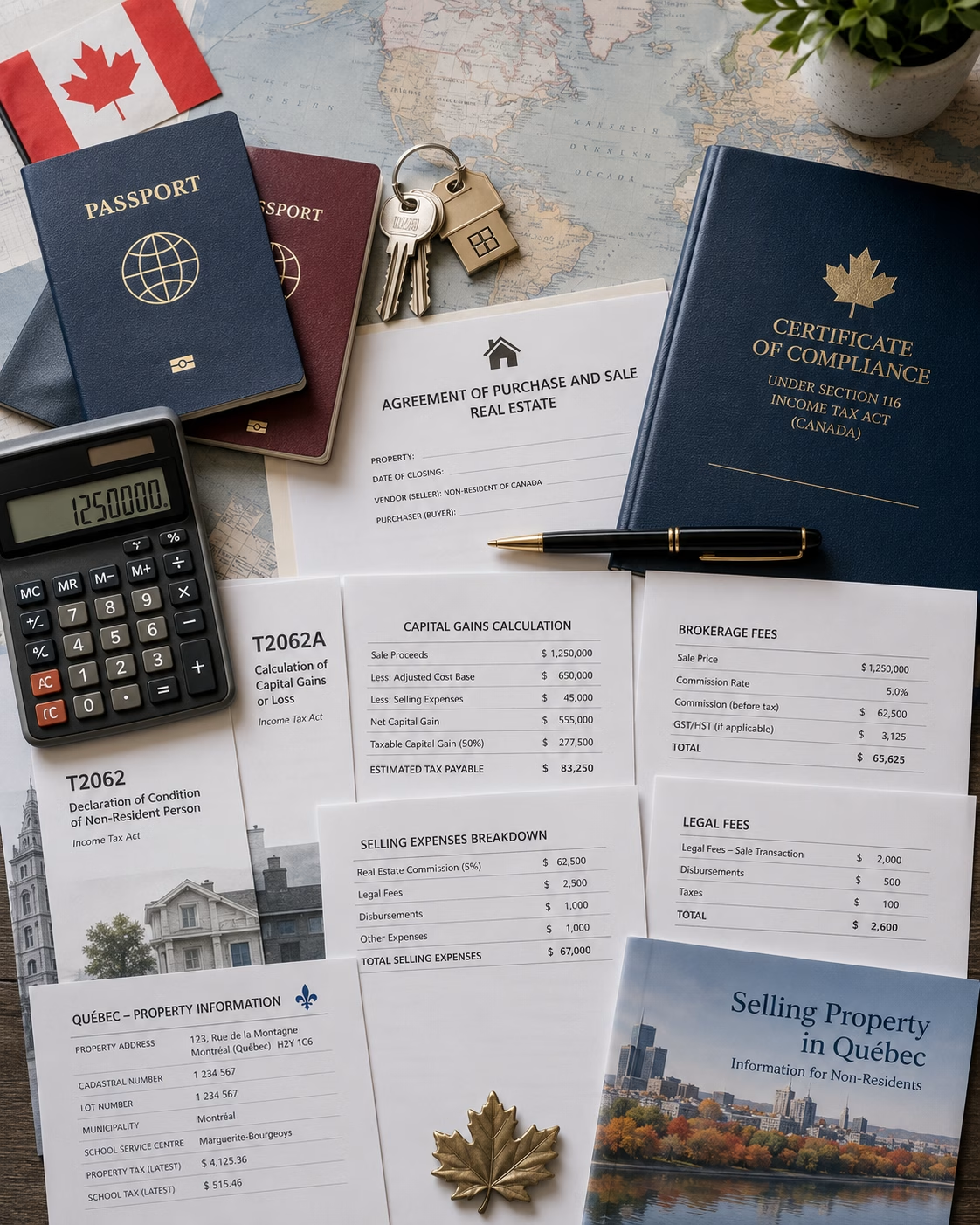
The T2062 form is generally used to request a compliance certificate when disposing of a taxable Canadian property. The T2062A may apply to certain categories of specific properties, such as depreciable property or property held other than as capital. The choice of the right form depends on the nature of the property and the transaction.
The application must be accompanied by relevant documents: purchase agreement, promise to purchase, deed of sale, cost statement, capitalized improvements, disposition costs, proof of residency, gain calculation, information on owners, and prior tax data. Incomplete preparation can delay the processing of the file and create tensions at closing.
Withholding Taxes and Transaction Cash Flow
The sale of property by a non-resident may result in significant withholding on the proceeds of disposition. The exact amount depends on several factors, including the type of property, estimated gain, applicable rules, and whether or not a certificate is present.
This withholding is not always the final tax, but it can tie up cash until the appropriate return is filed.
Planning before the sale allows for estimating the tax outcome, identifying eligible expenses, preparing the compliance file, and avoiding the seller discovering too late the tax impact of the transaction. Impôts ici helps you anticipate these amounts for better sale planning.
Particularities for Properties in Quebec
When a property is located in Quebec, provincial obligations may be added to federal processes. Revenu Québec may require its own documents, calculations, and notices related to the disposition of a taxable Quebec property.
Coordination between federal and provincial levels becomes essential.
A non-resident selling a condo, rental property, secondary residence, or land in Quebec must therefore plan for a comprehensive process. Impôts ici, based in Montreal, can assist in preparing the required information, communicating with transaction professionals, and following the relevant tax steps.
Satisfied Clients
Hours of Experience
In Tax Savings
Sale of Property by a Non-Resident
After the Sale: Declaration and Possible Recovery
Obtaining a compliance certificate does not always conclude the file. The non-resident seller may need to file a Canadian return to report the actual gain, account for eligible expenses, and determine the final tax. If the withholdings exceed the actual tax payable, a refund request may be possible as part of the return.
This step is important, as many sellers mistakenly believe that the withholding is final. A well-prepared return can allow for recovering an overpaid amount or regularizing the balance owed without uncertainty.

Sale of Property by a Non-Resident
Tax Support for Safe Selling
The sale of Canadian property by a non-resident must be carefully planned. Impôts ici assists you in choosing forms, preparing the compliance certificate, calculating the gain, coordinating with the notary, and filing the required returns.
Whether you own a condo, rental property, land, or a former residence in Canada, our team helps you secure the transaction and reduce the tax risks associated with the sale.
Before listing for sale, it is advisable to gather the purchase deed, improvement invoices, brokerage fees, legal fees, rental statements, prior returns, and documents proving non-resident status. This information will be used to estimate the gain, prepare the certificate request, and avoid delays at closing.
Impôts ici
A Company Close to You, Here to Help!

Years of Experience Serving You.
Discover Us!
The Sale of Property by a Non-Resident with Impôts ici
Impôts ici can intervene upstream with the notary, broker, or other advisors to ensure that the tax aspect is integrated into the transaction timeline. This coordination is important, as tax deadlines do not always follow the pace of a real estate sale.