
Impôts ici
International Tax Treaties
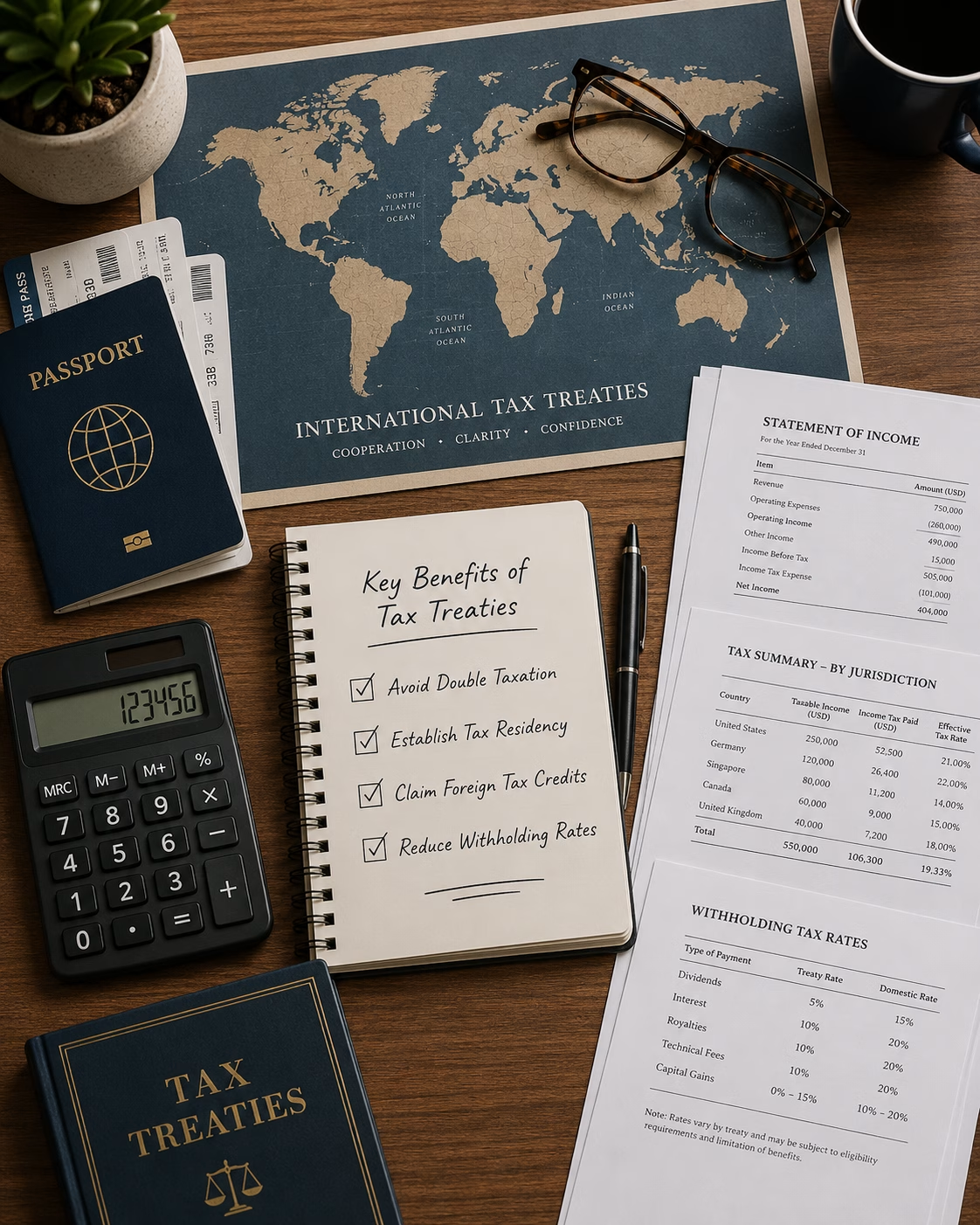
International tax treaties serve to regulate taxation when two countries can impose taxes on the same person, income, or transaction. They can influence tax residency, withholding taxes, pensions, dividends, interest, capital gains, employment income, business income, and foreign tax credits.
They do not eliminate all tax obligations, but they can alter the outcome.
Impôts ici assists individuals, entrepreneurs, retirees, investors, and businesses who need to interpret a tax treaty between Canada and another country. Our team helps you understand the applicable rules and produce consistent tax returns.

Your business requires professionals to support you
International Tax Treaties
The Role of a Tax Treaty
A tax treaty generally aims to avoid double taxation and prevent tax evasion. It allocates taxing rights between two countries and provides mechanisms for granting a credit, exemption, or reduced rate. Canada has many tax treaties, but each treaty has its own articles, definitions, and conditions.
It is not enough to know that a treaty exists. You must check if it applies to your situation, your residency status, the type of income, and the relevant period. The same country may treat a salary, pension, dividend, or capital gain differently.
International Tax Treaties
Tax Residency and Tie-Breaker Rules
When a person is considered a resident of two countries according to the internal rules of each, the treaty may provide tie-breaker criteria. These criteria may examine the permanent home, center of vital interests, habitual abode, nationality, or a procedure between competent authorities.
This analysis is crucial for expatriates, newcomers, retirees abroad, and international families. A wrong conclusion about residency can lead to double reporting or omission. Impôts ici helps you document the facts and interpret the relevant articles.

Income, Withholdings, and Reduced Rates
Tax treaties can reduce certain withholding taxes on dividends, interest, royalties, pensions, or other cross-border payments. They can also specify in which country employment or business income is taxable. However, applying a reduced rate may require proof of residency, forms, or steps with the payer.
It is also important to distinguish the right to tax from the practical withholding mechanism. A payer may withhold an amount by default, even if the treaty allows for relief. You must document the request, produce the appropriate forms, or claim the amount on a return.
Foreign Tax Credits
Even with a tax treaty, income may be taxed in two countries. The foreign tax credit often helps reduce double taxation when taxes have been paid abroad on income reported in Canada.
This credit must be calculated according to Canadian rules and applicable limits.
The calculation requires accurately identifying foreign income, eligible foreign tax, converting to Canadian dollars, and the country involved. Credits do not replace the filing of information forms, such as T1135 or T1134, when required.
Satisfied Clients
Hours of Experience
In Tax Savings
International Tax Treaties
Businesses and Permanent Establishments
For businesses, tax treaties are essential to determine whether foreign activities create a permanent establishment or a filing obligation.
A non-resident business conducting activities in Canada may need to file a T2 even if it claims an exemption based on a treaty.
Service provisions, agents, offices, sites, contracts, and employees present in a country must be examined. A hasty interpretation can create unexpected withholdings, penalties, or filing obligations.


International Tax Treaties
Support for Applying the Right Treaty
Applying a tax treaty requires a technical reading, but also a concrete understanding of your situation. Impôts ici supports you in analyzing your status, the type of income, the applicable treaty, tax credits, forms, and supporting documents.
Whether you are a Canadian resident with foreign income, a non-resident with Canadian income, an international business, or a retiree living abroad, our firm helps you reduce the risks of double taxation and defend a consistent tax position.
Before applying a treaty, you must gather proof of residency, income documents, withholdings applied, foreign returns, presence dates, contracts, and the exact country involved. A treaty does not apply generally to a person: it applies to a specific income, period, and situation.
Impôts ici
A Business Close to You, Here to Help!

Years of Experience Serving You.
Discover Us!
The International Tax Treaties with Impôts ici
Impôts ici can help you document the tax position taken. This documentation is important if a payer applies a default withholding, if a tax authority requests justification, or if a foreign return must reflect the same treatment as the Canadian return.
This documentation is particularly important for recurring situations: annual pensions, dividends, rents, service contracts, or employment income split between two countries. A well-documented position from the first year facilitates future filings and reduces the risks of inconsistency between tax administrations.
When multiple countries are involved, this verification must be repeated for each of them. A valid treatment with the United States, France, or another country does not automatically apply to another jurisdiction. Each treaty must be read separately.