
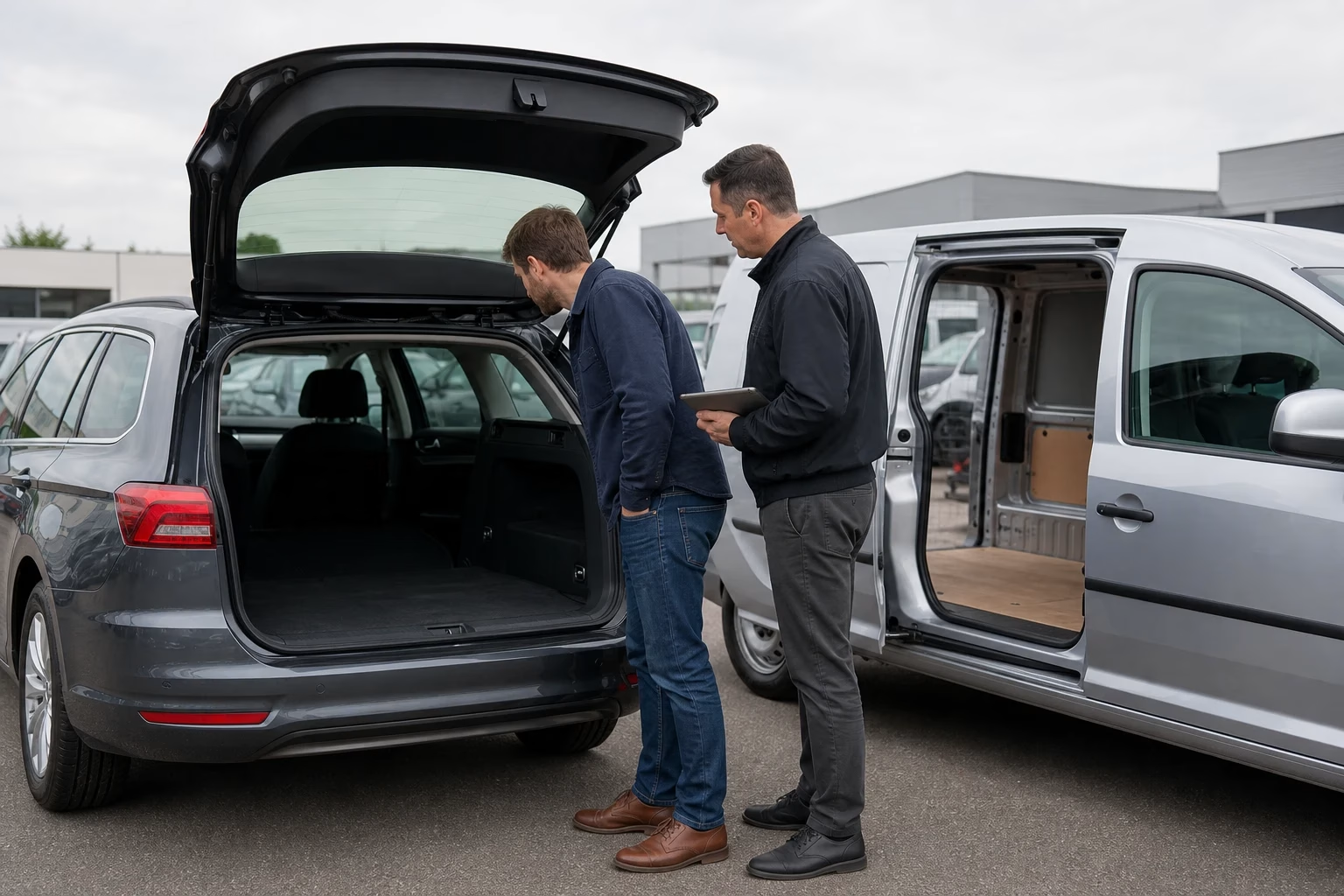
Buying or leasing a vehicle should not be decided from the monthly payment alone. Expected ownership period, mileage, business use, financing costs, resale value and annual tax limits can lead to very different results.
For a lightly used car, fixed cost and flexibility often matter more than a tax deduction. For a business or self-employed person, the choice also involves personal ownership, corporate ownership and kilometre-based reimbursement.
Compare total cost rather than the payment
A purchase includes price, interest, maintenance, insurance, taxes and resale value. A lease includes payments, down payment, fees, mileage limits, wear and end-of-term charges. A lower payment may conceal a longer term or significant residual value.
The comparison should use the same period and mileage. If the vehicle will be kept for many years, buying can spread the cost beyond the financing term. If needs change frequently, leasing may provide flexibility in exchange for contractual restrictions.
Calculate the portion actually used to earn income
A self-employed person does not automatically deduct all vehicle costs because the car is occasionally used to meet clients. Expenses are allocated based on business kilometres compared with total kilometres. The normal trip between home and a regular place of work is generally personal.
A travel log should show the date, destination, purpose and distance. Fuel, repairs, insurance, registration, interest and lease invoices should also be retained.
Understand tax limits on purchases and leases
For an acquired passenger vehicle, the cost eligible for capital cost allowance is capped under a limit that is updated periodically. Deductible interest may also be limited. For a leased vehicle, the eligible expense is subject to a ceiling and a formula that considers the vehicle’s value.
The limits change over time and should be checked for the acquisition year or new lease. Buying a more expensive vehicle solely for a deduction does not make the excess cost deductible.
- Expected holding period and annual mileage.
- Business-use percentage supported by a log.
- After-tax cost, including tax limits.
- Resale value and lease-end charges.
Personal vehicle or corporate vehicle?
When a corporation owns or leases a car that a shareholder or employee uses personally, a taxable benefit may be included in income. The corporation must track availability and personal kilometres. The benefit can exceed the expected saving where personal use is high.
It may be simpler for the individual to own the vehicle and receive a reasonable reimbursement for business travel. The choice should be compared with compensation, sales tax and cash flow. See our services for self-employed individuals and corporate tax.
Choose the vehicle before choosing the deduction
The vehicle should first fit the actual need and budget. Tax analysis then determines the eligible portion and best ownership method. A decision based only on the monthly payment or tax refund is rarely complete.
Impôts Ici can compare buying, leasing, personal ownership and corporate ownership. To calculate the after-tax cost, contact our team.